


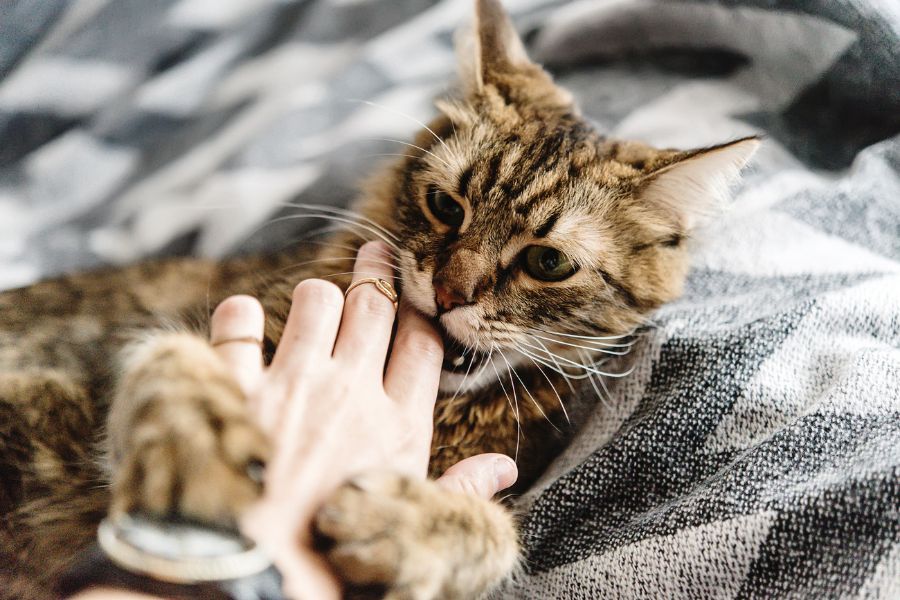
A cat bite is more than just a quick nip; it is often your cat’s way of communicating discomfort, fear, or overstimulation. Understanding why cats bite helps prevent injuries and strengthens your relationship with your pet. In this guide, we explain the most common reasons behind cat bites, when to worry, and how to stop biting behavior safely.
Why Do Cats Bite? Understanding Feline Communication
Cats rely heavily on body language and subtle signals to communicate. When those signals are missed, a cat bite may be the next step. Biting is rarely random. Instead, it usually happens for a reason.
Common reasons cats bite include:
- Fear or anxiety
- Overstimulation during petting
- Pain or medical issues
- Play aggression
- Territorial behavior
- Stress or environmental changes
Recognizing these triggers helps you prevent bites before they happen. Cats often give warning signs first, such as flicking tails, flattened ears, or sudden body tension. If you notice these signals, it is best to stop interacting and give your cat space.
Love Bites vs Aggressive Cat Bites
Not all cat bites mean aggression. Some are gentle nips during play or affection, often called love bites. However, even gentle biting should not be encouraged.
Love Bites
Love bites typically happen when:
- Your cat is being petted for too long
- Your cat becomes overstimulated
- Your cat is expressing excitement
These bites are usually soft and do not break the skin. Still, they indicate your cat is reaching their tolerance limit.
Aggressive Cat Bites
Aggressive bites are more serious and often involve:
- Growling or hissing
- Dilated pupils
- Flattened ears
- Tense body posture
These bites may break the skin and cause pain. Aggressive biting often means your cat feels threatened or uncomfortable.
Play Aggression and Cat Biting
Kittens and young cats often bite during play. This behavior mimics hunting instincts and is completely natural. However, it can become a problem if not corrected early.
Signs of play aggression include:
- Pouncing on hands or feet
- Grabbing with front paws
- Biting during active play
To prevent this type of cat bite, avoid using your hands as toys. Instead, use:
- Feather wands
- Laser pointers
- Interactive toys
- Puzzle feeders
These alternatives allow your cat to release energy safely without targeting people.
Pain and Medical Issues That Cause Cat Bites
Sometimes, a sudden cat bite is a sign of pain or illness. Cats often hide discomfort until it becomes severe. If your friendly cat suddenly starts biting, a medical issue may be the cause.
Health problems that may lead to biting include:
- Dental disease
- Arthritis
- Injuries
- Skin infections
- Neurological conditions
Watch for additional signs such as:
- Reduced appetite
- Hiding more than usual
- Limping
- Changes in grooming habits
If you notice these symptoms, schedule a veterinary visit. Treating the underlying issue often resolves biting behavior.
Overstimulation: A Common Cause of Cat Bites
Many cats enjoy affection, but only for a limited time. When petting goes on too long, overstimulation can occur.
Signs your cat is becoming overstimulated:
- Tail flicking
- Skin rippling
- Ears turning sideways
- Sudden restlessness
Once these signs appear, stop petting immediately. Ignoring these signals often leads to a cat bite. Every cat has a different tolerance level. Learning your cat’s comfort zone is key to preventing bites.
Fear and Stress-Related Cat Bites
Fear is another major cause of biting. Cats may bite when they feel trapped or threatened.
Common stress triggers include:
- Loud noises
- New pets
- New people
- Moving homes
- Vet visits
To reduce fear-based biting:
- Provide hiding spaces
- Introduce changes gradually
- Use calming pheromone products
- Maintain a consistent routine
A calm environment helps reduce anxiety and biting behavior.
How to Prevent Cat Bites
Preventing a cat bite starts with understanding your cat’s behavior and needs. Here are practical steps you can take:
1. Learn Body Language
Watch for warning signs like tail flicking, flattened ears, and tense posture.
2. Avoid Rough Play
Never use hands or feet as toys. This teaches your cat that biting is acceptable.
3. Use Positive Reinforcement
Reward calm behavior with treats, praise, or gentle petting.
4. Provide Enrichment
Cats need mental stimulation. Try:
- Climbing trees
- Window perches
- Interactive toys
- Puzzle feeders
5. Respect Boundaries
If your cat walks away, let them go. Forcing interaction increases the risk of biting.
What to Do If Your Cat Bites You
Even with precautions, bites can still happen. Knowing how to respond is important.
If your cat bites you:
- Stay calm and avoid sudden movements
- Gently remove your hand
- Clean the wound immediately
- Wash with soap and warm water
- Apply antiseptic
Cat bites can become infected quickly due to bacteria in their mouths. Seek medical care if you notice:
- Swelling
- Redness
- Pain
- Fever
- Pus
Even small bites may require professional care.
When to See a Veterinarian for Cat Biting
You should consult a veterinarian if:
- Biting behavior increases suddenly
- Your cat shows signs of pain
- Bites become aggressive
- Your cat injures family members
A veterinarian can rule out medical issues and recommend behavior solutions. Early intervention helps prevent long-term problems.
Training Tips to Reduce Cat Biting
Training can help reduce cat bite behavior. Consistency is important.
Try these strategies:
- Stop interaction immediately after a bite
- Redirect with toys
- Reward calm behavior
- Avoid punishment
Punishing your cat may increase fear and aggression. Positive reinforcement works best. You can also create a predictable routine. Cats feel safer when feeding, playtime, and rest follow a consistent schedule.
Are Some Cats More Likely to Bite?
Some cats may be more prone to biting, including:
- Kittens raised without littermates
- Cats with limited socialization
- High energy breeds
- Cats with past trauma
These cats may need extra patience and structured training. With time and consistency, most cats improve significantly. A cat bite is often your pet’s way of communicating discomfort, fear, or overstimulation. Understanding your cat’s body language and respecting boundaries can prevent most biting incidents. If biting becomes frequent or aggressive, a veterinary guide can help identify underlying causes and provide solutions. For expert care and guidance, contact Bucksport Veterinary Hospital in Bucksport, ME.
FAQs
Q1: Why does my cat bite me gently while petting?
Ans: Gentle biting often happens due to overstimulation. Your cat is signaling that they have had enough interaction.
Q2: Are cat bites dangerous?
Ans: Yes, cat bites can cause infections due to bacteria in a cat’s mouth. Even small bites should be cleaned and monitored.
Q3: How do I stop my cat from biting during play?
Ans: Use interactive toys instead of hands. Reward calm behavior and stop play immediately if biting occurs.
Q4: Should I punish my cat for biting?
Ans: No, punishment can increase fear and aggression. Positive reinforcement is more effective.
Q5: When should I take my cat to the vet for biting?
Ans: Visit a veterinarian if biting increases suddenly, becomes aggressive, or is accompanied by signs of illness.